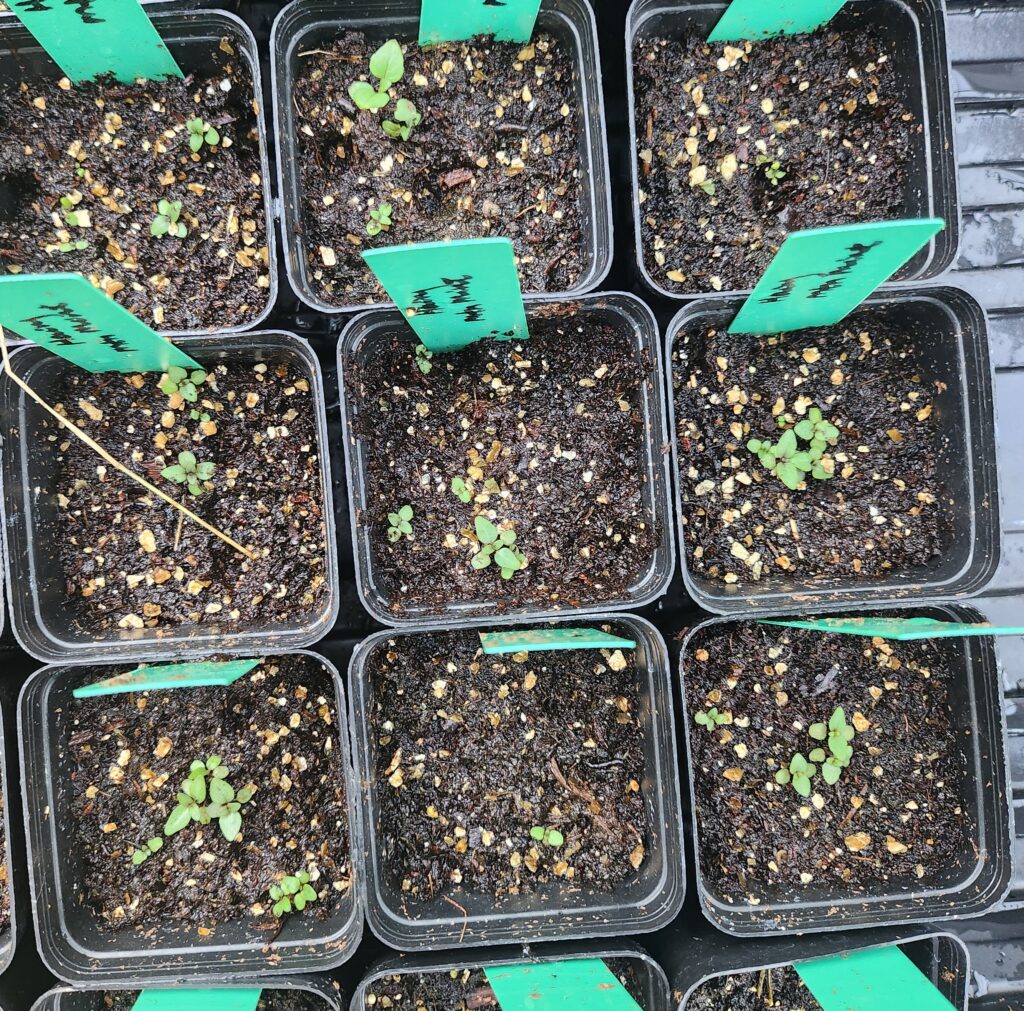
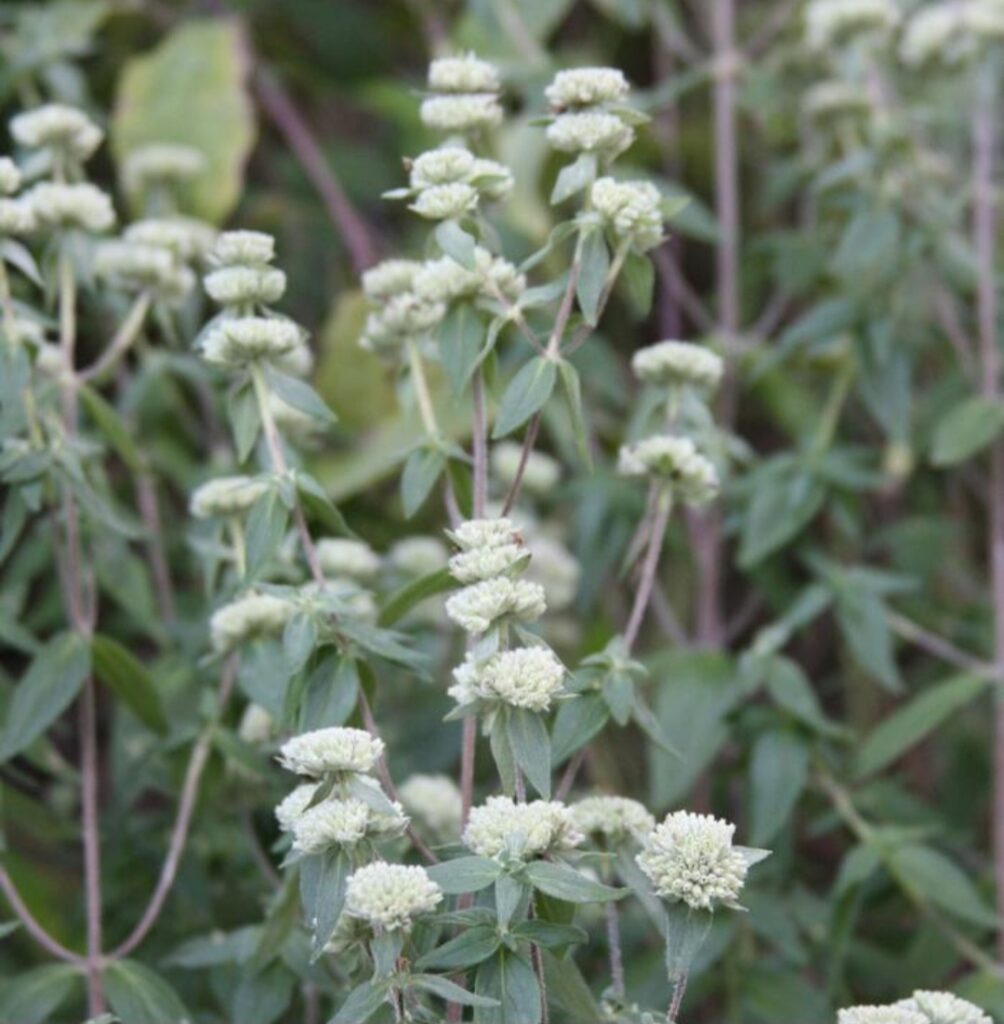
Pycnanthemum verticillatum, commonly known as Hairy or Whorled Mountain Mint, is a native perennial wildflower found in open woods, prairies, and meadows across central and eastern North America. This upright, clump-forming member of the mint family (Lamiaceae) is known for its narrow, lance-shaped leaves arranged in whorls around square stems and its dense, rounded clusters of tiny white to pale lavender flowers, often dotted with purple, that bloom from mid- to late summer. Although flowers are small, they are highly attractive to a wide variety of pollinators, including bees, butterflies, moths, and beneficial wasps. In fact, Pycnanthemum species are considered among the best native plants for pollinator support in North American landscapes.
Whorled Mountain Mint thrives in full sun to light shade and prefers average to dry, well-drained soils, including sandy or rocky substrates. It is well adapted to prairie, meadow, and xeric garden settings, making it a top choice for low-maintenance, ecologically focused plantings. The plant typically grows 2-3 feet tall and slowly expands by short rhizomes, forming well-behaved colonies without becoming aggressive like some other mints. Its minty-aromatic foliage adds sensory appeal and deer resistance, making it even more garden-friendly.