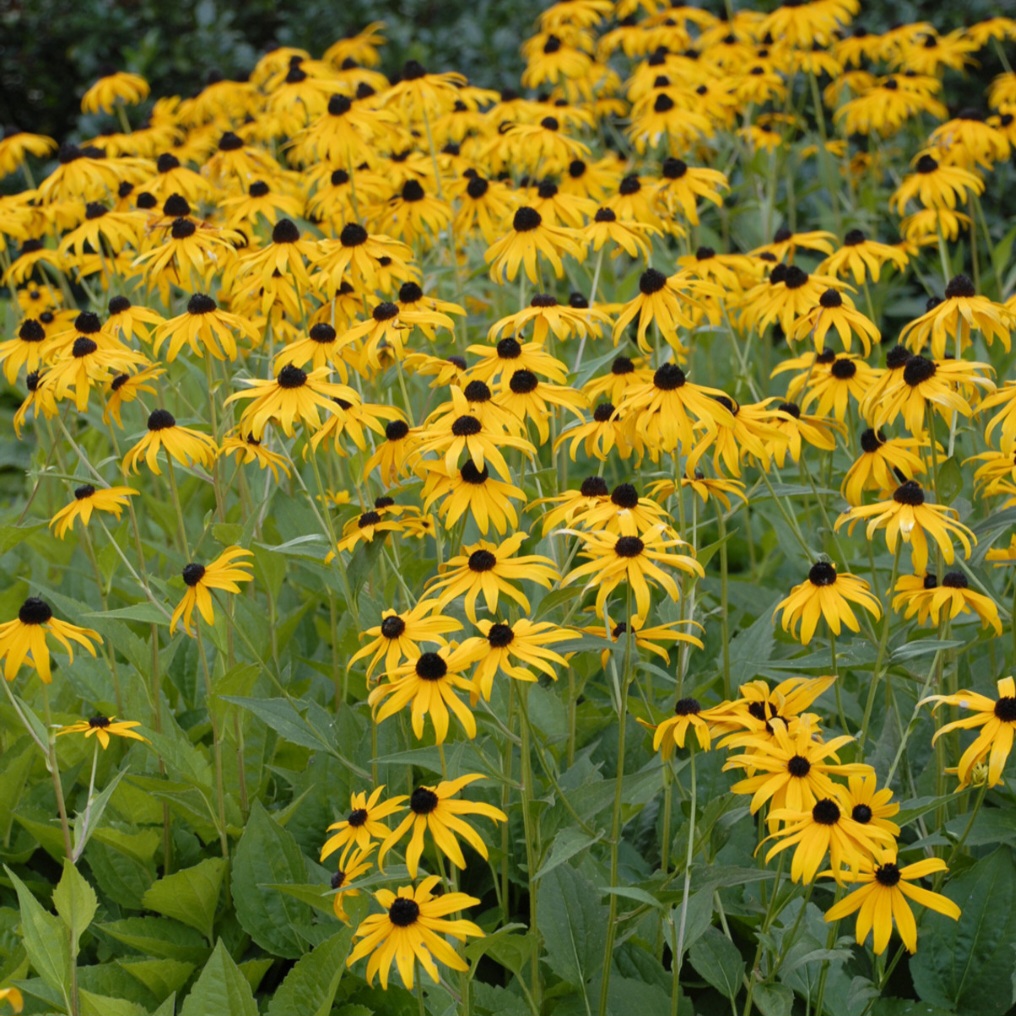
Rudbeckia hirta, commonly known as Black-Eyed Susan, is a striking herbaceous plant native to much of North America. Though often treated as a perennial, it is technically a short-lived perennial or biennial, frequently grown as an annual due to its fast growth and abundant blooms. It typically reaches 1-3 feet in height and features bold, daisy-like flowers with golden yellow petals surrounding a dark brown to black central cone, and it blooms from early summer to fall. These cheerful blooms are not just visually appealing but also highly attractive to pollinators such as bees, butterflies, and beetles. Additionally, birds like goldfinches feed on the seed heads in late summer and fall, making Black-Eyed Susan a valuable addition to wildlife gardens.
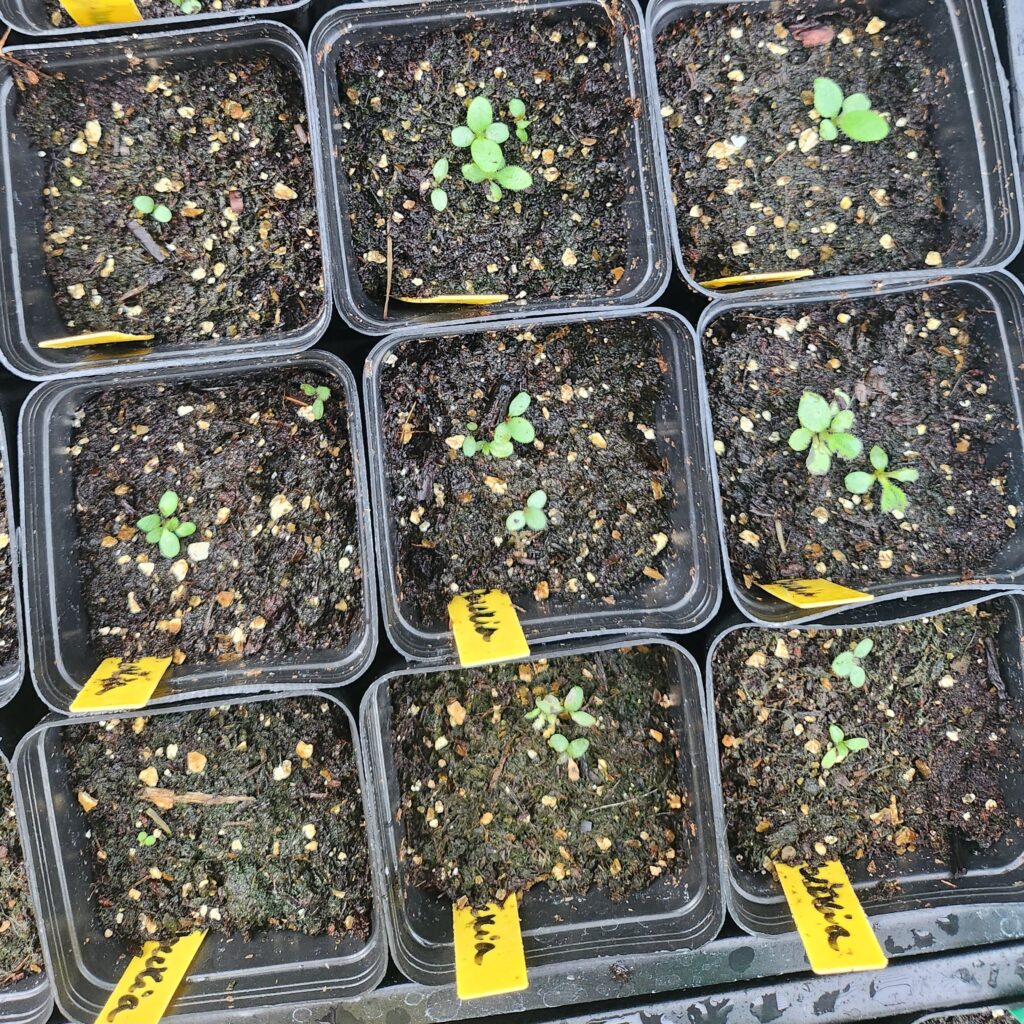
Propagation is easy from seed, which can be sown directly outdoors in spring or fall. It often self-sows, forming naturalized colonies over time, especially in informal gardens or prairie-style plantings. Black-Eyed Susan pairs beautifully with native grasses, coneflowers, bee balm, and other sun-loving perennials, creating vibrant and dynamic gardening displays. With its extended bloom time, rugged resilience, and value to pollinators and birds, it is a staple in native plantings, pollinator gardens, and any landscape aiming for color and ecological benefit.