![]()
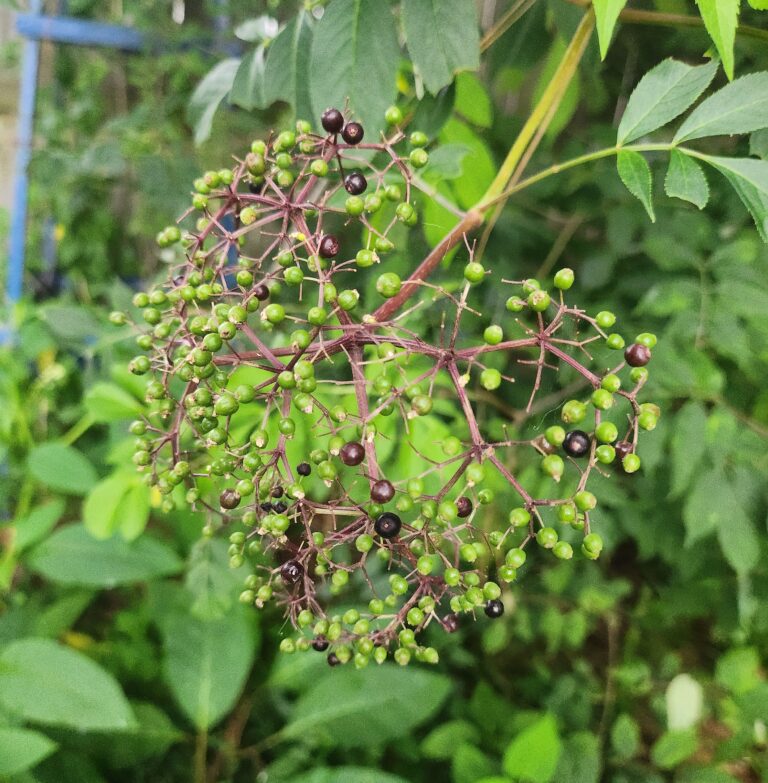
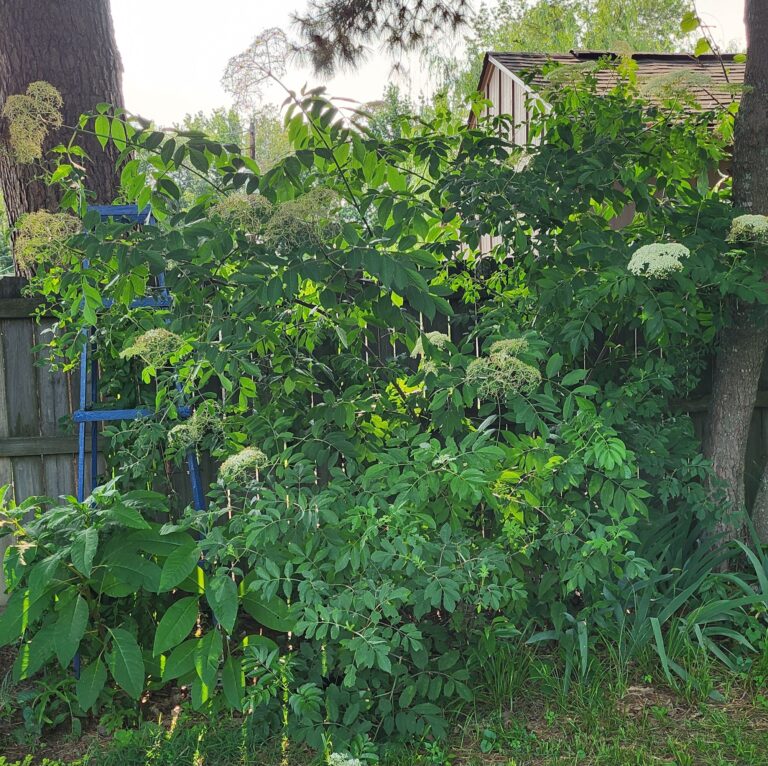
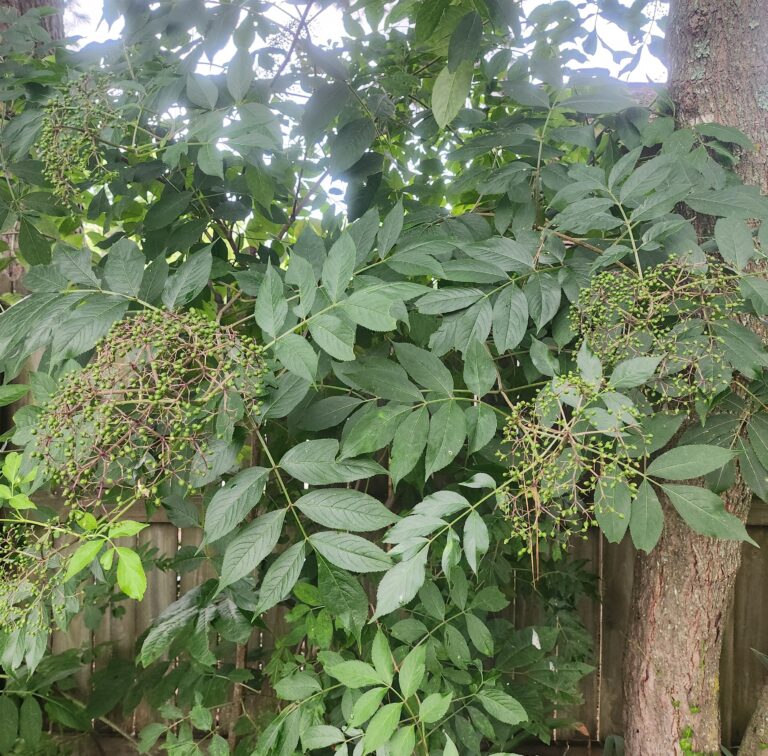
Sambucus canadensis, commonly known as American Elderberry, is a fast-growing, deciduous shrub native to eastern and central North America. Belonging to the Adoxaceae family, it typically grows 5-12 feet tall and wide, forming dense thickets through root suckers. This species is especially valued for its clusters of small, fragrant white flowers that bloom in early to mid-summer, followed by dark purple to black berries in late summer. The flowers attract pollinators like bees and butterflies, while the berries serve as a vital food source for birds and wildlife. The fruit is also edible for humans when fully ripe and cooked, and it is often used in syrups, jams, wines, and pies. However, the raw berries and other plant parts contain compounds that can be mildly toxic if consumed.
American Elderberry thrives in full sun to part shade, but it produces the most flowers and fruit when grown in full sun. It prefers moist, fertile, well-drained soil, though it tolerates a variety of soil types, including clay and sandy loams. It naturally grows in low-lying areas like stream banks, forest edges, and wet meadows, making it a great choice for rain gardens.. While it enjoys consistently moist soil, it can adapt to drier conditions once established. A layer of mulch can help conserve moisture and suppress weeds around the base.
Minimal maintenance is required for this hardy shrub. Prune in late winter or early spring to remove dead or weak stems and to encourage strong, new growth. The flowers and fruit appear on new wood. Thinning out older canes every few years can improve air circulation and overall plant health. American Elderberry spreads by suckers. It can be contained by periodically digging up and removing unwanted shoots or planting it in a controlled space. It is relatively pest-resistant but can occasionally suffer from leaf spot, borers, or powdery mildew in crowded or damp conditions.

Propagation is easy through softwood or hardwood cuttings, as well as division of suckers. If growing for fruit production, consider planting more than 1 genetically distinct plant to improve cross-pollination and yield. American Elderberry is an excellent choice for edible landscapes, wildlife gardens, naturalized areas, or hedgerows, where it adds seasonal interest and supports biodiversity. With its combination of ornamental flowers, edible fruit, and ecological value, American Elderberry is both a practical and beautiful addition to a native or habitat-focused garden.