American Beautyberry

(Callicarpa americana)

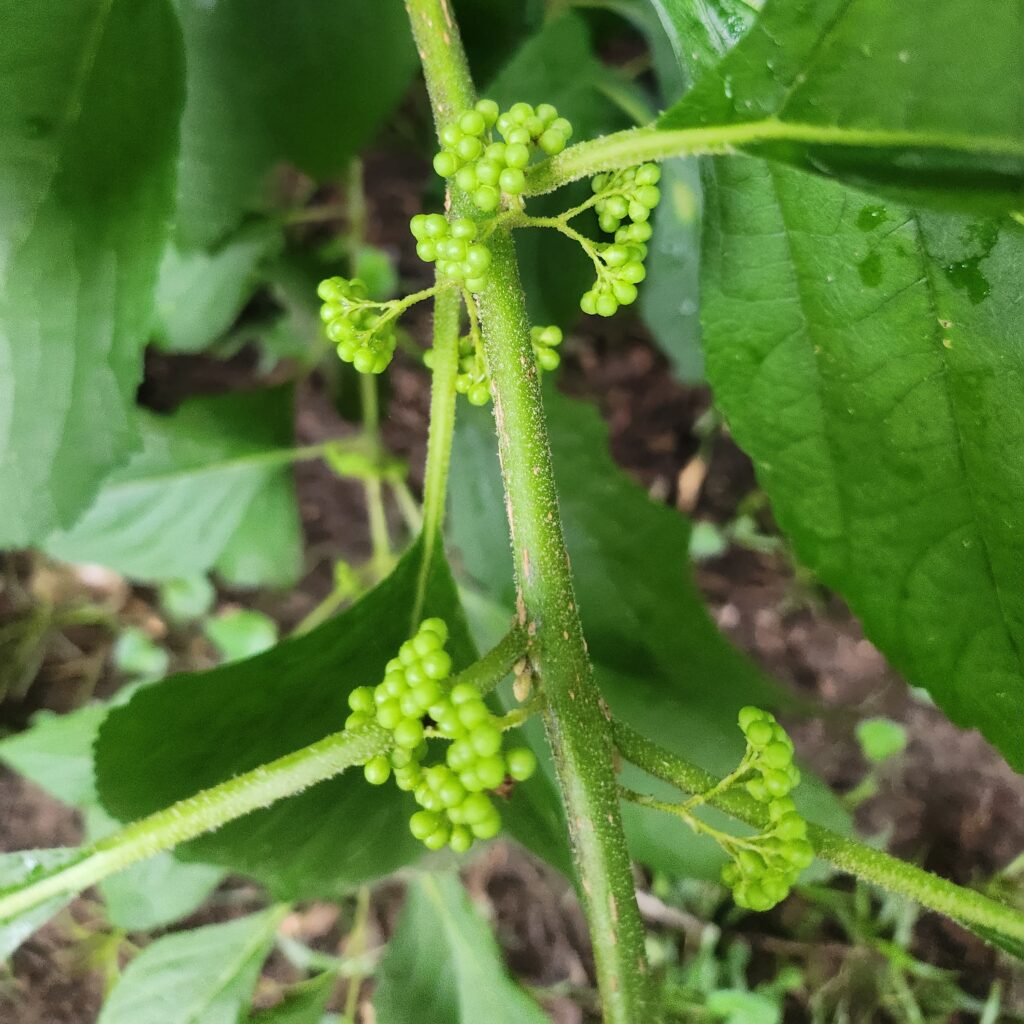
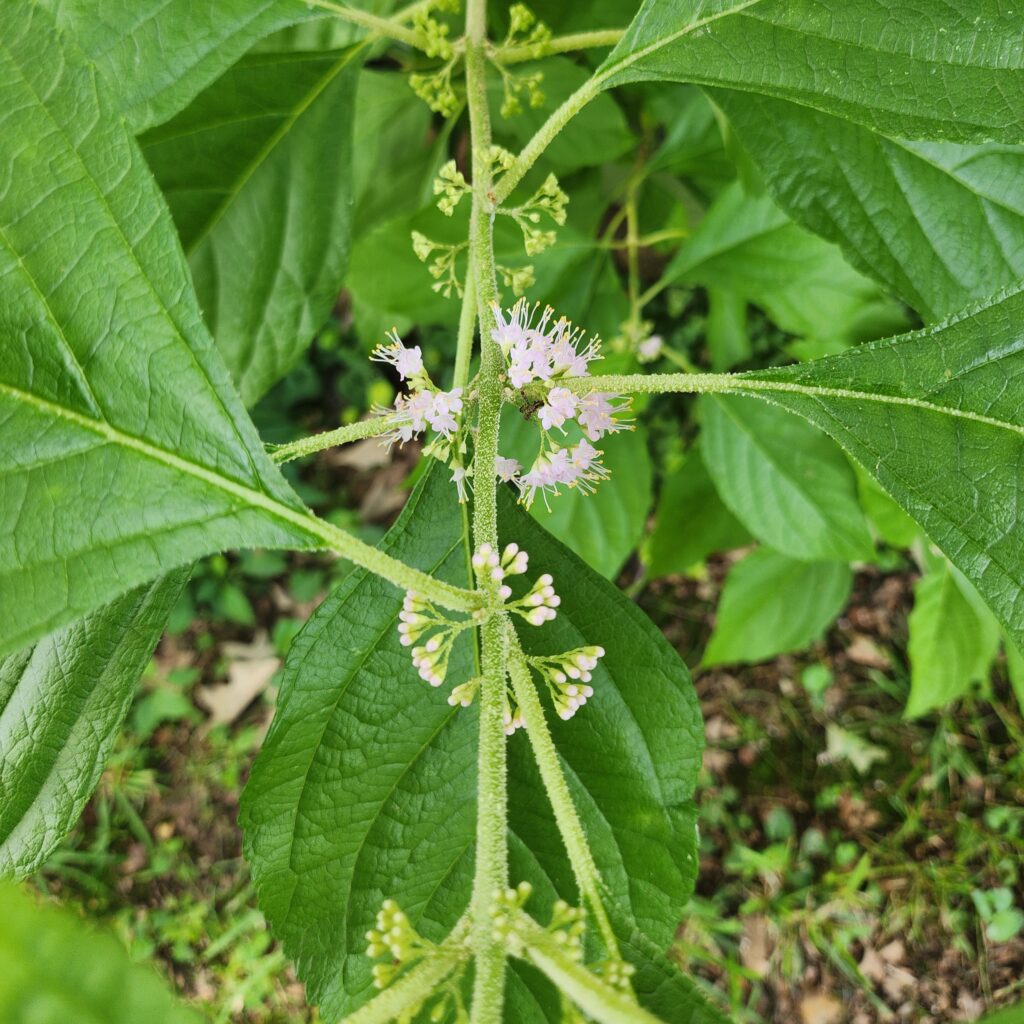
Callicarpa americana, commonly known as American Beautyberry, is a deciduous shrub native to the southeastern United States known for its graceful form, attractive foliage, and, most notably, its stunning clusters of bright purple-magenta berries that encircle the stems in late summer and fall.  The berries persist well into the winter, providing a dramatic pop of color and a valuable food source for birds such as mockingbirds, cardinals, and finches.  Small, pale pink to lavender flowers bloom in the leaf axils from late spring to mid-summer, attracting a variety of pollinators including bees and butterflies.  The opposite, ovate leaves may take on a subtle yellow hue in fall, adding seasonal interest even before the berries appear.

American Beautyberry thrives in full sun to full shade, though it produces more flowers and fruit the more sunlight it gets.  It is highly adaptable to a variety of soil types, including sandy, loamy, and clay soils, as long as they are well-draining.  It prefers moist, fertile soil but is also drought-tolerant once established.  Native to woodland edges, thickets, and streambanks, it makes an excellent choice for naturalistic landscapes, shade gardens, or wildlife plantings.  The shrub typically grows 3-6 feet tall and wide with an open, arching form that lends itself well to informal or layered plantings.

Care is minimal.  Pruning can be done in late winter to early spring to encourage bushier growth and maintain a more compact shape, especially in smaller gardens.  Since it flowers and fruits on new wood, even a hard prune won’t sacrifice berry production.  American Beautyberry is generally pest- and disease-free and deer-resistant to some degree, though deer may browse it lightly.  The berries are edible to humans and can be made into jellies, wines, or teas; although, their flavor is mild and best enhanced with sugar or spices.

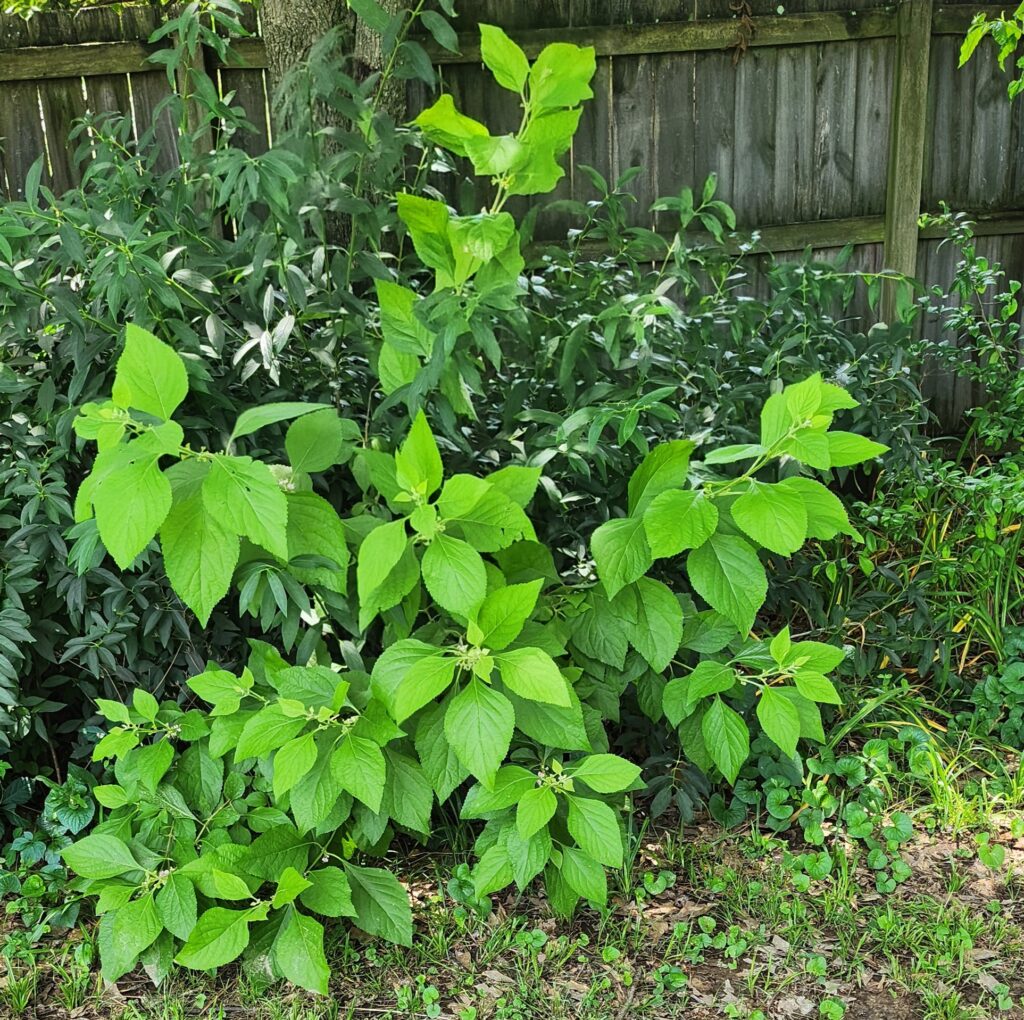
Propagation is easy via seeds, softwood cuttings, or division.  Seeds benefit from a period of cold stratification to improve germination rates.  In the landscape, American Beautyberry can be used as a specimen shrub, understory accent, or part of a native hedgerow or bird garden.  It pairs well with other shade-tolerant natives like Virginia Sweetspire, Aronia, and Fothergilla, offering food and shelter for a variety of wildlife while providing year-round interest.  With its elegant form, vibrant berries, and ecological value, American Beautyberry is a beautiful and functional choice for native and naturalized gardens across much of the southern and eastern United States.