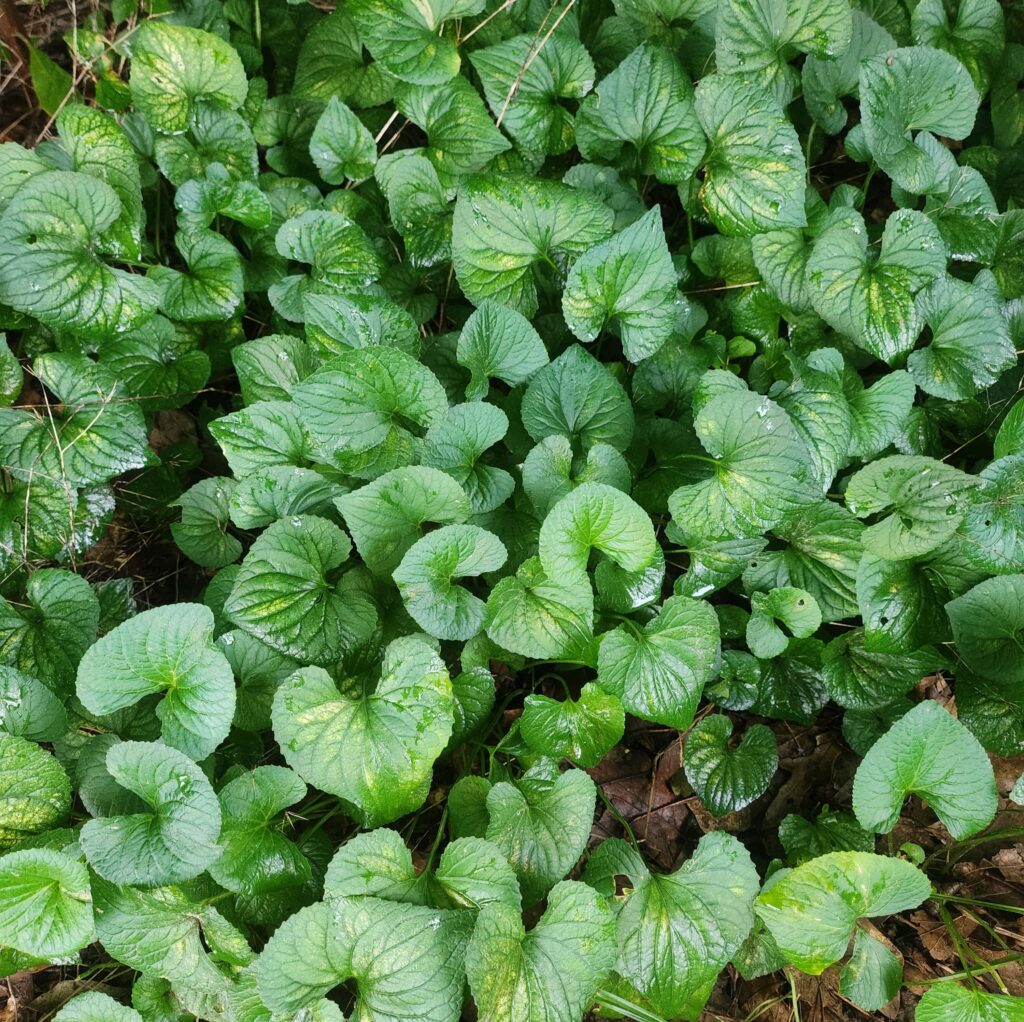
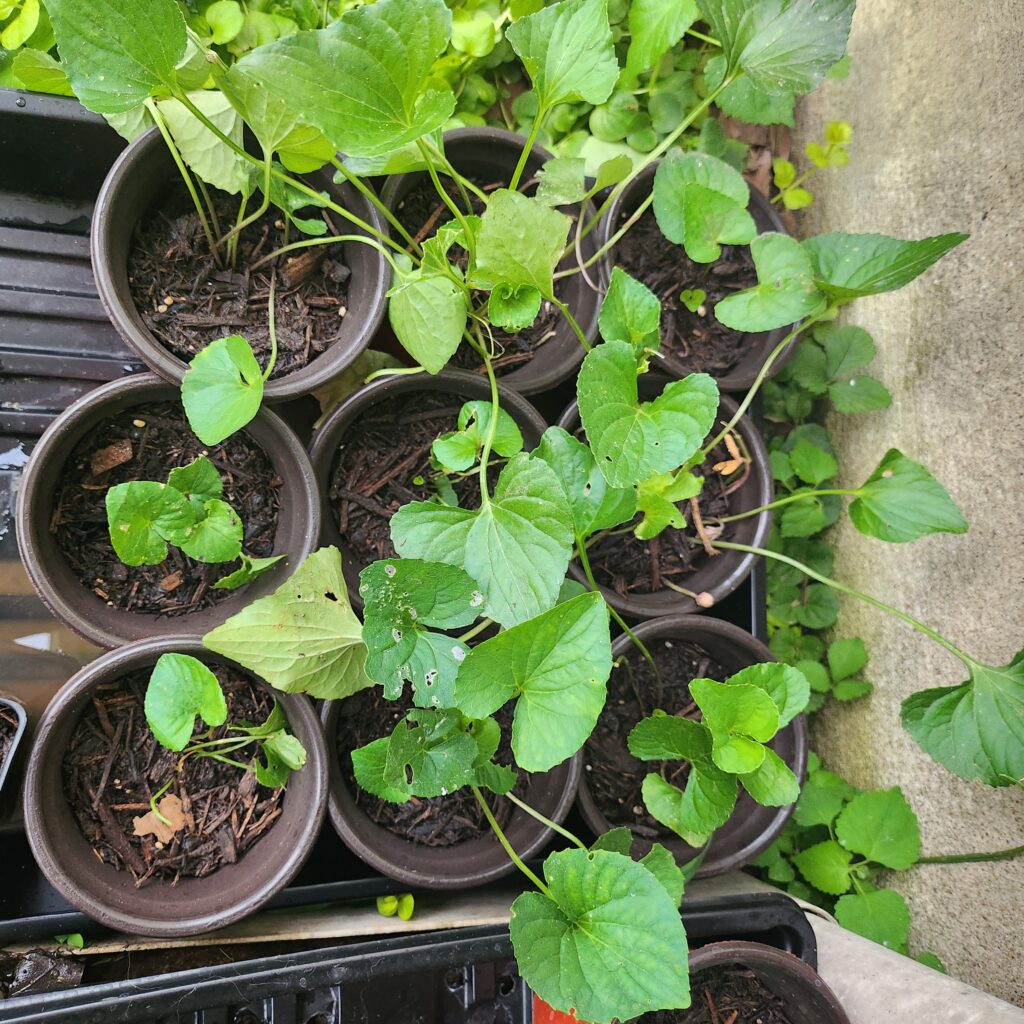
Viola sororia, commonly known as Common Blue Violet, is a low-growing herbaceous perennial native to eastern and central North America. Previously referred to as Viola papilionacea, this charming wildflower typically grows 4-8 inches tall and spreads via rhizomes and self-seeding, forming dense, ground-level colonies. It is best known for its heart-shaped, dark green leaves and striking violet-blue (sometimes white or purple-veined) flowers that bloom in early to mid-spring. The flowers are an important early nectar source for pollinators, particularly native bees and butterflies, and the foliage serves as a larval host for fritillary butterfly species. Later in the season, the plant may also produce closed, self-pollinating flowers called cleistogamous blooms, which allow it to seed even without pollinators.
Common Blue Violet prefers part shade, thriving in the dappled light of woodlands, under trees, or along shady garden borders. It tolerates a wide range of soils, from loamy to clay, but it grows best in moist, rich, well-drained soil. Although it can handle short dry periods once established, it performs best with consistent moisture and benefits from mulching to retain soil humidity. It is commonly found in natural settings like forest floors, streambanks, and meadows, but it also readily colonizes lawns, gardens, and disturbed areas and can become weedy in favorable conditions.