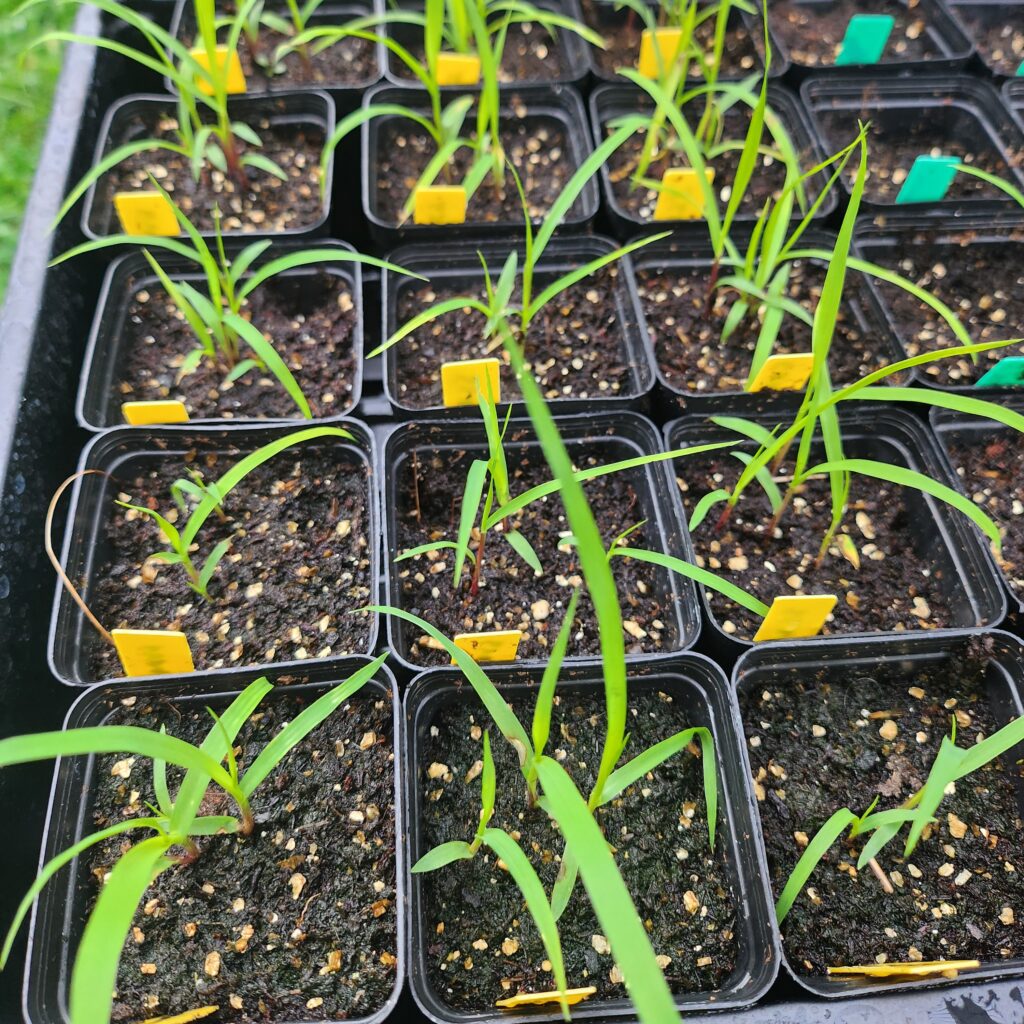
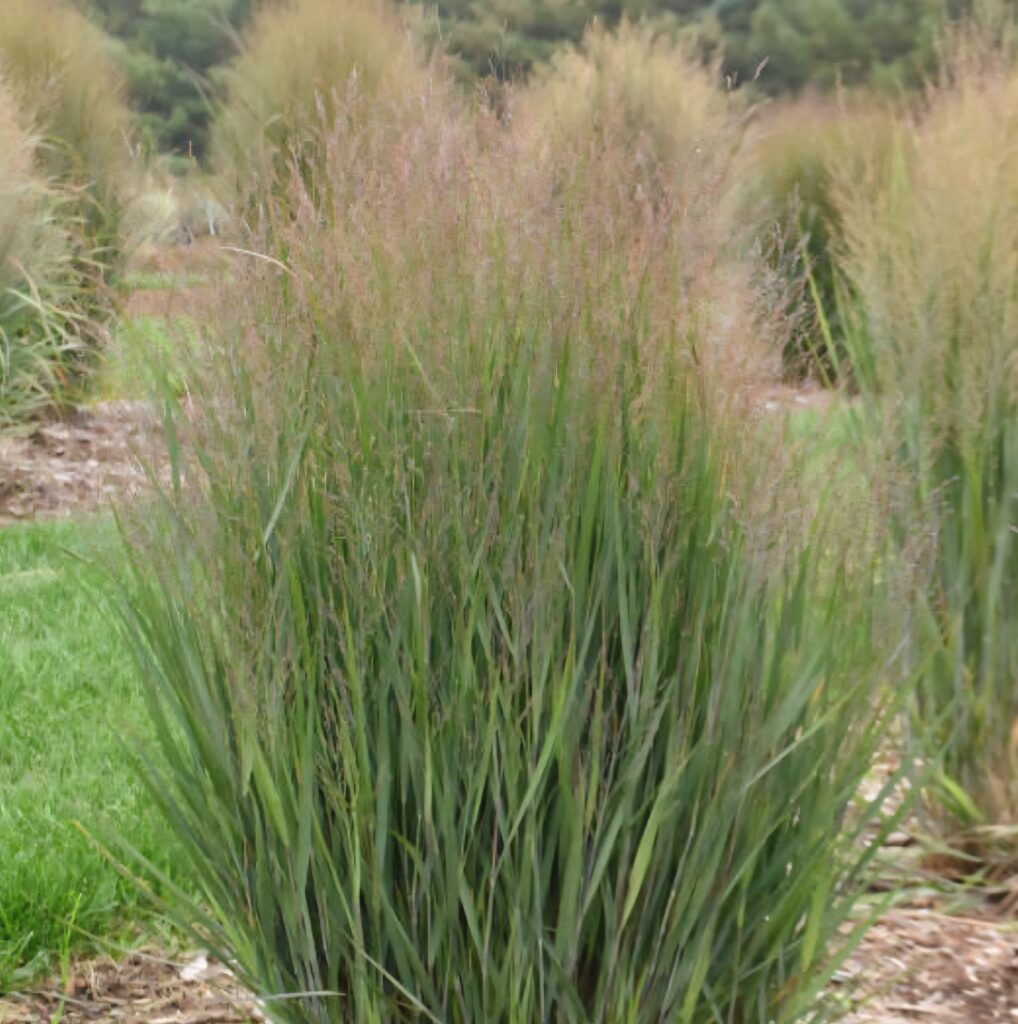
Panicum virgatum, commonly known as Switchgrass, is a clump-forming, warm-season perennial grass native to tallgrass prairies, meadows, and open woodlands throughout much of North America. Known for its upright, vase-shaped form, graceful foliage, and clouds of airy flower panicles in late summer, it is a favorite for both naturalistic and formal landscape designs. Switchgrass foliage typically ranges from blue-green to bright green in summer, turning striking shades of gold, copper, or reddish-burgundy in fall before fading to a soft tan in winter, where its tall seed heads and stems offer texture and habitat. Mature plants can range from 3-6 feet tall, depending on site conditions.
Switchgrass thrives in full sun and is highly adaptable to a range of soil types, including clay, loam, or sandy soils, as long as they are well-drained. It tolerates both drought and periodic flooding, making it especially valuable in rain gardens, bioswales, and restoration plantings. It is also prized for its use in erosion control, wildlife habitat, and carbon sequestration. Though it can self-seed under ideal conditions, Switchgrass is typically not aggressive and maintains a clumping habit, making it garden-appropriate.