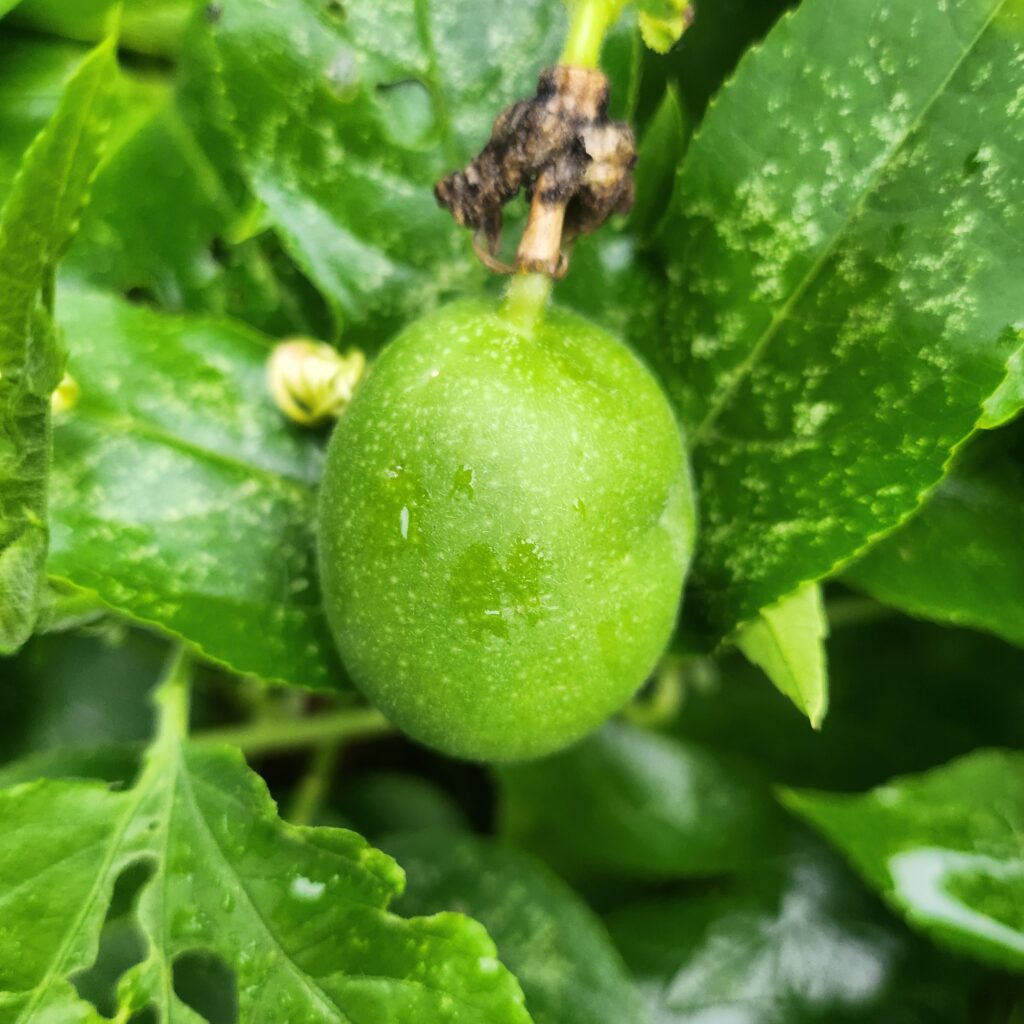
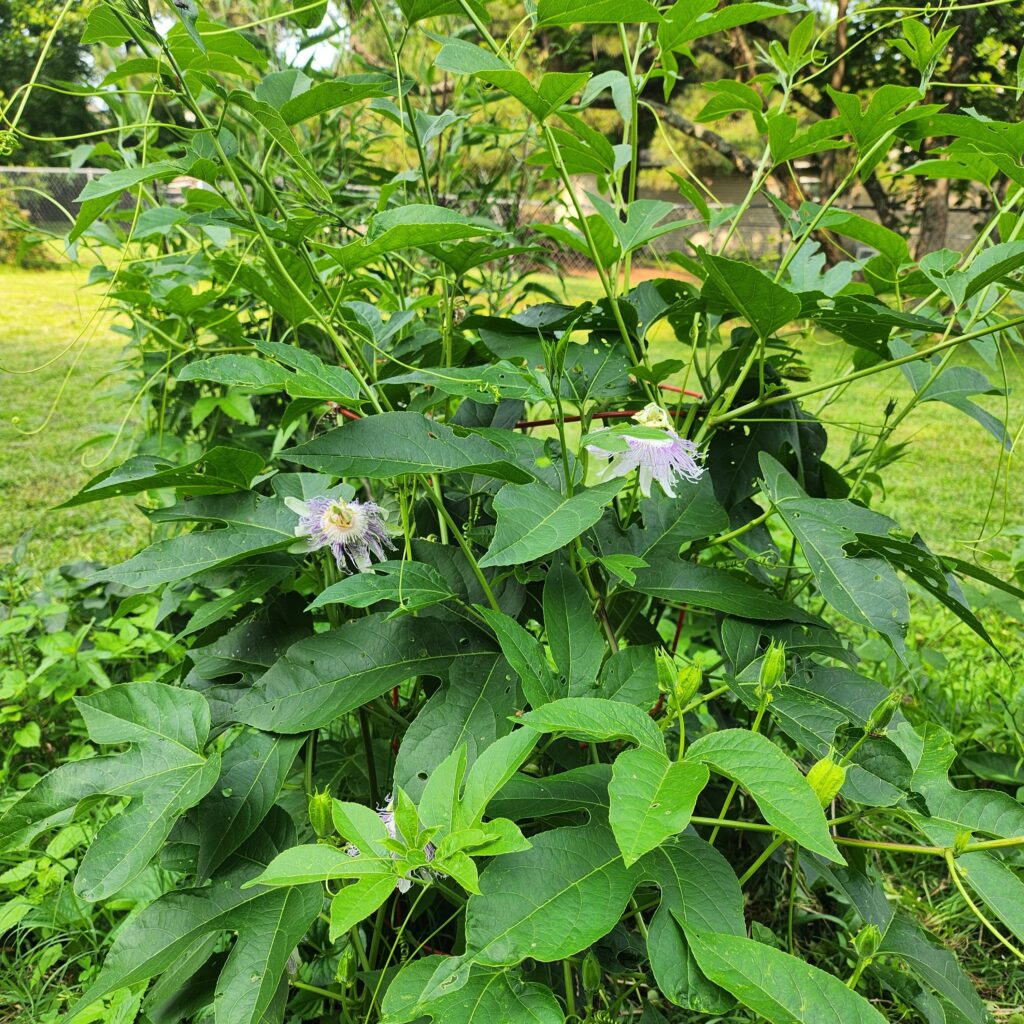
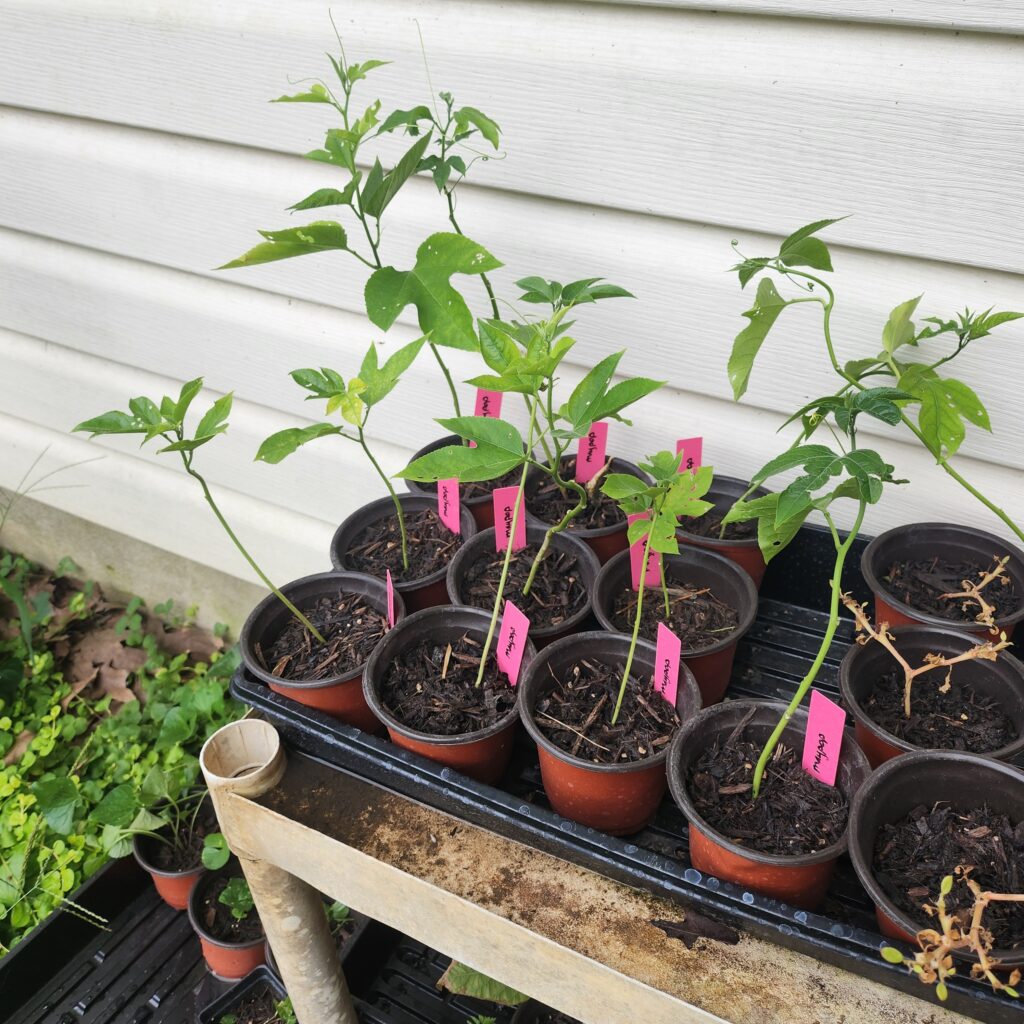
This vine thrives in full sun to partial shade, preferring at least 6 hours of sunlight per day for optimal flowering and fruiting. It grows best in well-drained, fertile soil, though it is quite adaptable and will tolerate poor or sandy soils as long as drainage is adequate. Passionflower is heat- and drought-tolerant once established, making it well suited for a variety of garden settings, including trellises, fences, arbors, or naturalized edges. It dies back to the ground in the winter but regrows rapidly in spring via underground rhizomes. It is hardier than many other passionflower species, with roots that can withstand winter freezes.
Minimal care is needed beyond providing structural support for climbing and monitoring its spread. The vine can become aggressive in ideal settings, spreading by both rhizomes and seeds, so some containment or regular thinning may be necessary in garden settings. Pruning while the plant is still dormant in late winter or early spring helps shape the plant and encourage vigorous new growth. You can also do a light pruning during the growing season to shape. It rarely suffers from pests, though aphids and caterpillars may occasionally feed on the foliage, and Japanese beetles can be a nuisance in some areas. Overall, it is resilient and mostly disease-free.