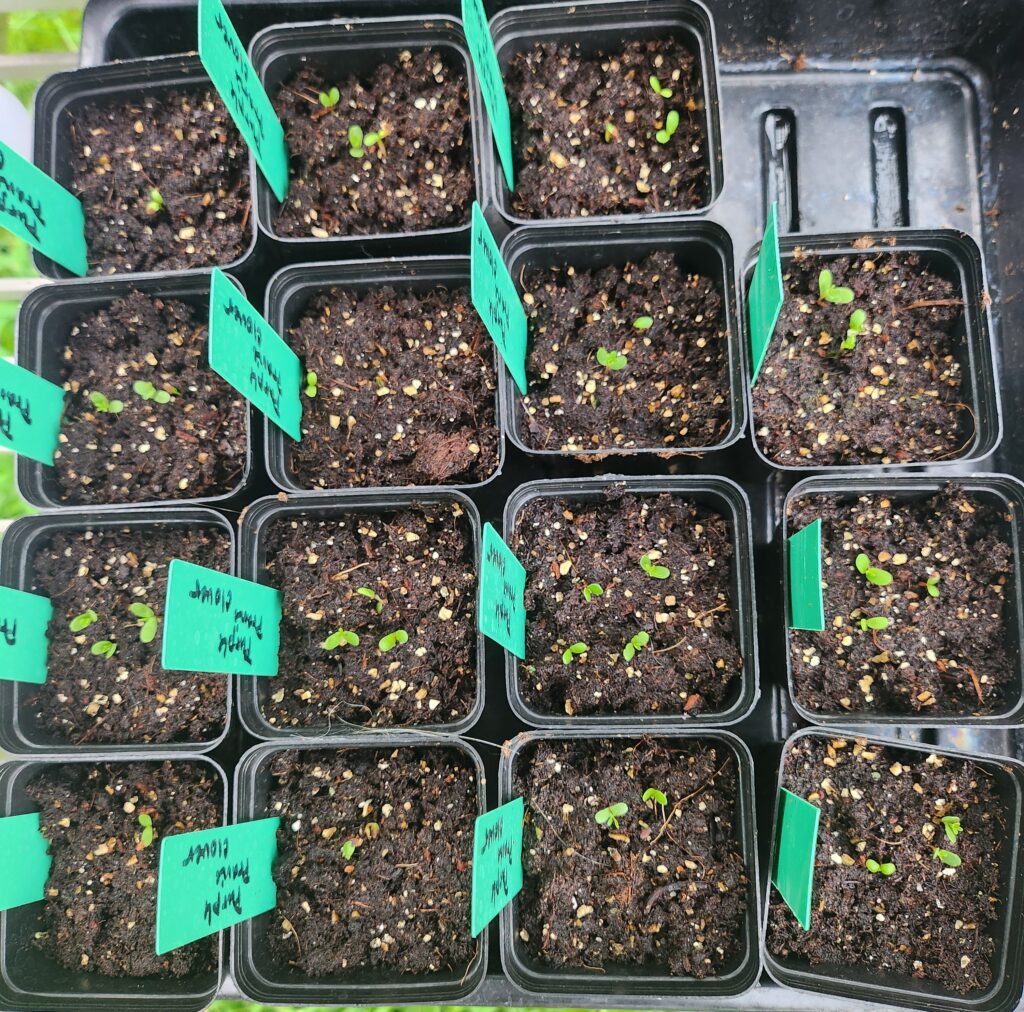
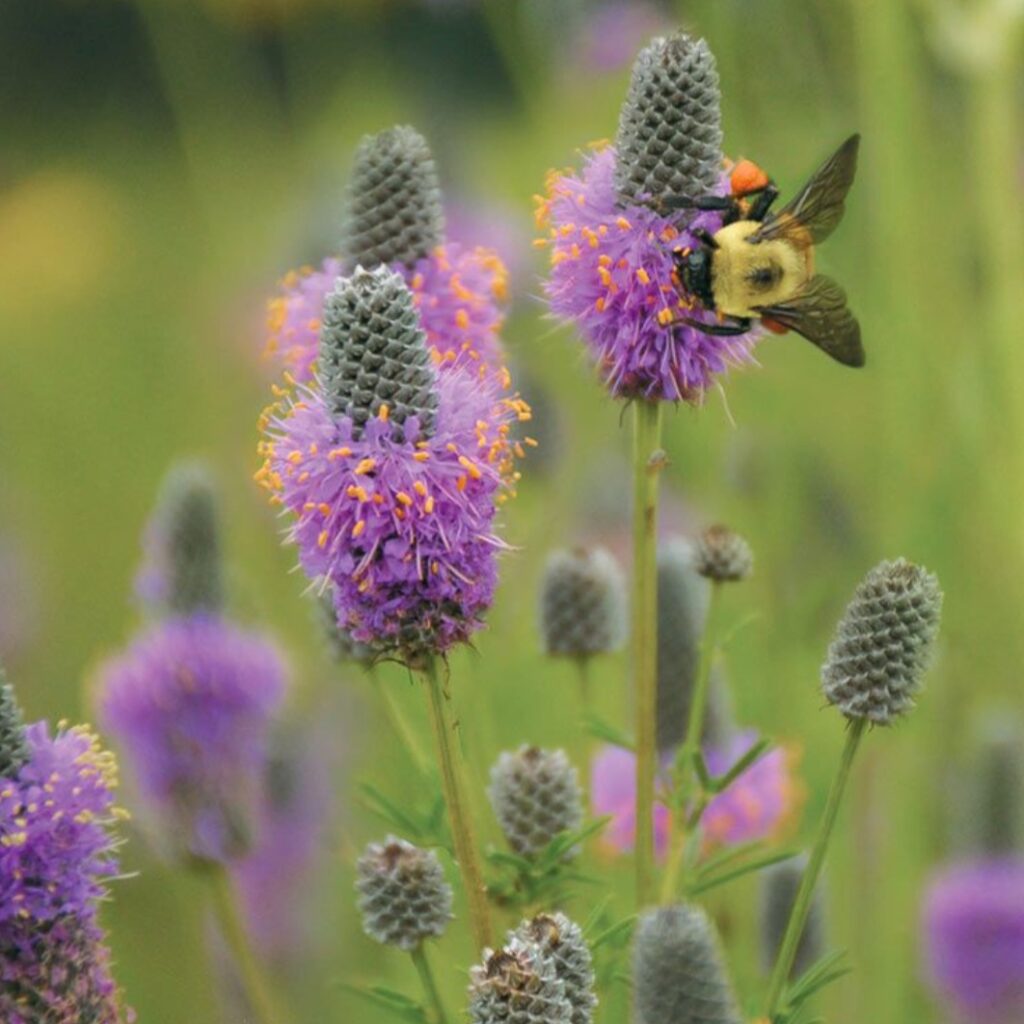
Dalea purpurea, commonly known as Purple Prairie Clover is a long-lived herbaceous perennial native to central and eastern North America, particularly thriving in tallgrass and mixed-grass prairies. Belonging to the legume family (Fabaceae), this upright, clump-forming plant typically reaches 1-3 feet tall and is admired for its dense, cylindrical spikes of bright purple to magenta flowers that bloom from early to mid-summer. Each flower spike is composed of hundreds of tiny florets that bloom in rings from the bottom up, creating an eye-catching visual effect. The fine-textured, fern-like foliage and deep taproot make it both attractive and exceptionally drought-resistant. The plant plays a vital ecological role, enriching the soil through nitrogen fixation and supporting a wide range of pollinators, especially native bees, butterflies, and beetles.
Purple Prairie Clover thrives in full sun and is highly tolerant of dry, well-drained soils, including sandy, rocky, and gravelly substrates. It performs well in lean soils and does not require fertilization, making it an ideal choice for low-maintenance or ecologically-focused plantings. While it prefers dry conditions, it can tolerate brief periods of moisture if the soil drains well. Once established, the plant is extremely drought-tolerant thanks to its deep taproot, which can extend several feet underground.